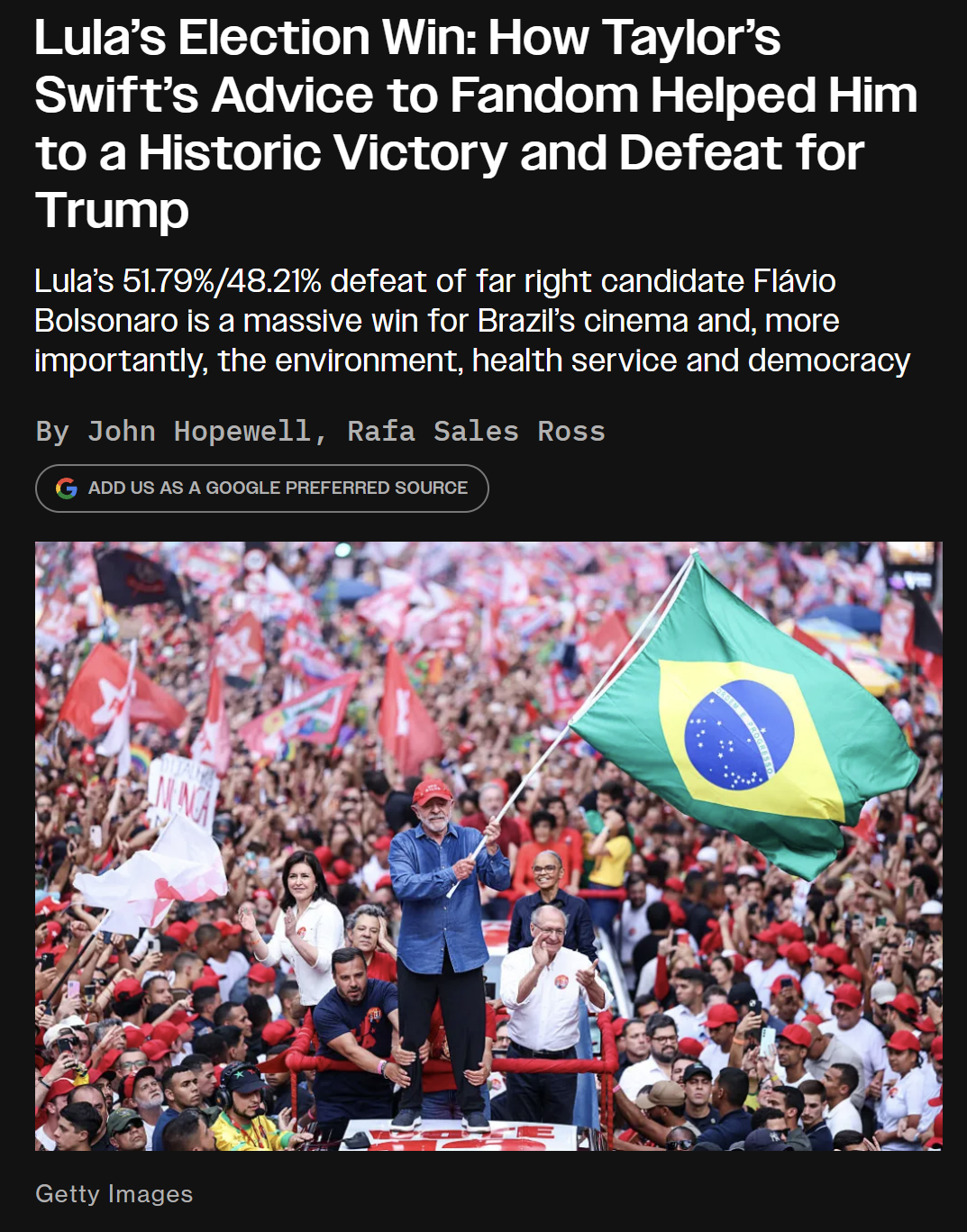
When major political shifts happen on the global stage, international media outlets often scramble to find angles that resonate with their home audiences. But when narrative framing attempts to tether a historic South American election to top-tier American pop stars who never spoke on the matter, it underscores a growing divide between traditional media headlines and the realities of modern digital organizing.
Following a pivotal presidential race, entertainment coverage seized upon the phenomenon of online fan bases rallying support for progressive causes. However, initial headlines singled out megastars whose personal political engagement had been minimal or nonexistent, attributing the momentum of a massive national voter mobilization to famous American figures. The reaction to this framing was swift, with observers pointing out how it diminished the actual labor of local organizers, political influencers, and millions of voters on the ground.
The Reality of Grassroots Digital Mobilization
What actually transpired on social media during the election cycle was a highly coordinated, organic campaign driven by Brazilian youth rather than top-down celebrity endorsements. Digital communities across various interests—spanning multiple pop music fandoms, gaming groups, and local cultural hubs—pooled their collective reach to share voter resources, push back against algorithmic suppression, and organize digital outreach.
Rather than responding to orders from international icons, these online networks operated independently. Local figures played a far more direct role in harnessing this digital energy. High-profile Brazilian politicians and grassroots organizers actively encouraged youth participation, creating direct lines of communication to distribute campaign materials, coordinate messaging, and combat online misinformation.
As one observer noted regarding the vast scale of the local effort:
"5% of the entire country is A LOT of people who anyone who doesn’t understand the scale. Generally when it comes to organizing and mobilizing we aim for 3% of the population so 5% is a huge undertaking, hats off to everyone who mobilized and made this happen."
This level of direct engagement went far beyond social media posting. Thousands of volunteers organized daily marches across cities, while digital strategists designed tailored content to maximize online visibility. The movement was built on shared national concerns over political governance, worker rights, and cultural protection, rendering the attribution of the victory to external pop icons largely nonsensical.
Headlines vs. Ground Truth
Critics were quick to point out the stark contrast between the sweeping claims made in entertainment reporting and the actual content of the coverage. In many instances, the connection to high-profile American artists hinged on a single offhand quote from a single voter mentioning general inspiration, rather than any direct action or endorsement from the artist themselves.
"I read through the whole article looking for how they connected this to Taylor Swift ... the ONLY direct link is a Swiftie activist referencing Taylor's past quote that the youth should 'take the lead.' That headline is so disconnected from the content of the article, let alone the reality on the ground, it might as well be in another galaxy."
The attempt to center global political events around familiar domestic celebrities highlights an ongoing trend in media algorithms: leveraging high-search names to drive traffic, even at the expense of journalistic context. For those who dedicated months to physical and digital campaigning, the narrative felt like an erasure of local agency.
"Giving a spineless billionaire, who said absolutely nothing, credit instead of the Brazilian people who’ve been fighting for their sovereignty. Yesterday there were so many pictures of the elderly going out to vote and people carrying them or helping them walk, but sure, it’s all thanks to her."
A Shared Feeling for Progress
Ultimately, the digital strategy that contributed to the election outcome demonstrates the evolving nature of political campaigning in the digital age. Young voters showed an ability to utilize existing online infrastructure—built around shared interests and pop culture—to execute serious political work without needing explicit directives from the figures they follow.
"Fandoms had a nice job into the communication work and collective positivity feel along the weeks into Second Round... Not about the artists,but the shared feeling for progress and future. Everyone put egos aside and went together"
As online communities continue to play a crucial role in modern democratic processes, the distinction between celebrity influence and genuine citizen action remains paramount. The outcome of the election belonged not to external cultural exports, but to the voters who mobilized their communities, organized their peers, and showed up at the ballot box.